Guides · Dade City, Florida
The Kumquat Industry That Built Dade City, FL
Dade City’s identity is built on a forgotten citrus industry and a fruit so obscure that the town’s annual festival doubles as a crash course in kumquats.
A Town Named for a War, Not a Fruit
The name came first, from a soldier, not a citrus grove. Dade City honors US Army Major Francis L. Dade, killed in the battle that opened the Second Seminole War. The early timeline is a quick succession of government formalities: the Hatton post office became the Dade City post office on 18 December 1884, and the town reincorporated as a city on 5 June 1889. It had already become the seat of Pasco County when the county was created in 1887.
That sequence—post office, county seat, incorporation—set the stage for a commercial hub. The railroads followed, and with them, agriculture. Citrus would eventually define the town’s public identity, but the civic bones were laid in the 1880s, when Dade City was just a name on a map and a courthouse square waiting for its first car show.
Why Kumquats? The Fruit That Built a Festival
Here’s the thing about kumquats: most of the country has never eaten one. It’s a citrus fruit the size of a large olive, and you eat it whole—peel and all. The peel is sweet, the flesh is sour, and the combination is a single-bite flavor bomb that confuses first-timers who expect an orange.
The fruit grows in quantity here. Pasco County’s climate and sandy soil suit it, and Dade City built its annual festival around it. The Kumquat Festival is held each January in downtown Dade City, drawing tens of thousands of visitors. That’s a remarkable number for a town of 7,570 people. The festival answers the question nobody asked until they arrive: what exactly is a kumquat, and why does this town care so much about it?
Kumquat Pie and the Taste of Pasco County
The festival’s star is kumquat pie, a Pasco County speciality you won’t find on menus elsewhere. Alongside it are kumquat jelly, kumquat butter, and the fresh fruit itself. The pie is the anchor—a sweet-tart concoction that turns the obscure fruit into something approaching mainstream.
The fruit’s obscurity is the point. A town that builds its winter festival around a citrus fruit most Americans have never tasted is making a statement: we grow something you don’t know, and we’re proud of it. The pie is the gateway.
Beyond the Fruit: Courthouse Square and the Cruise-In
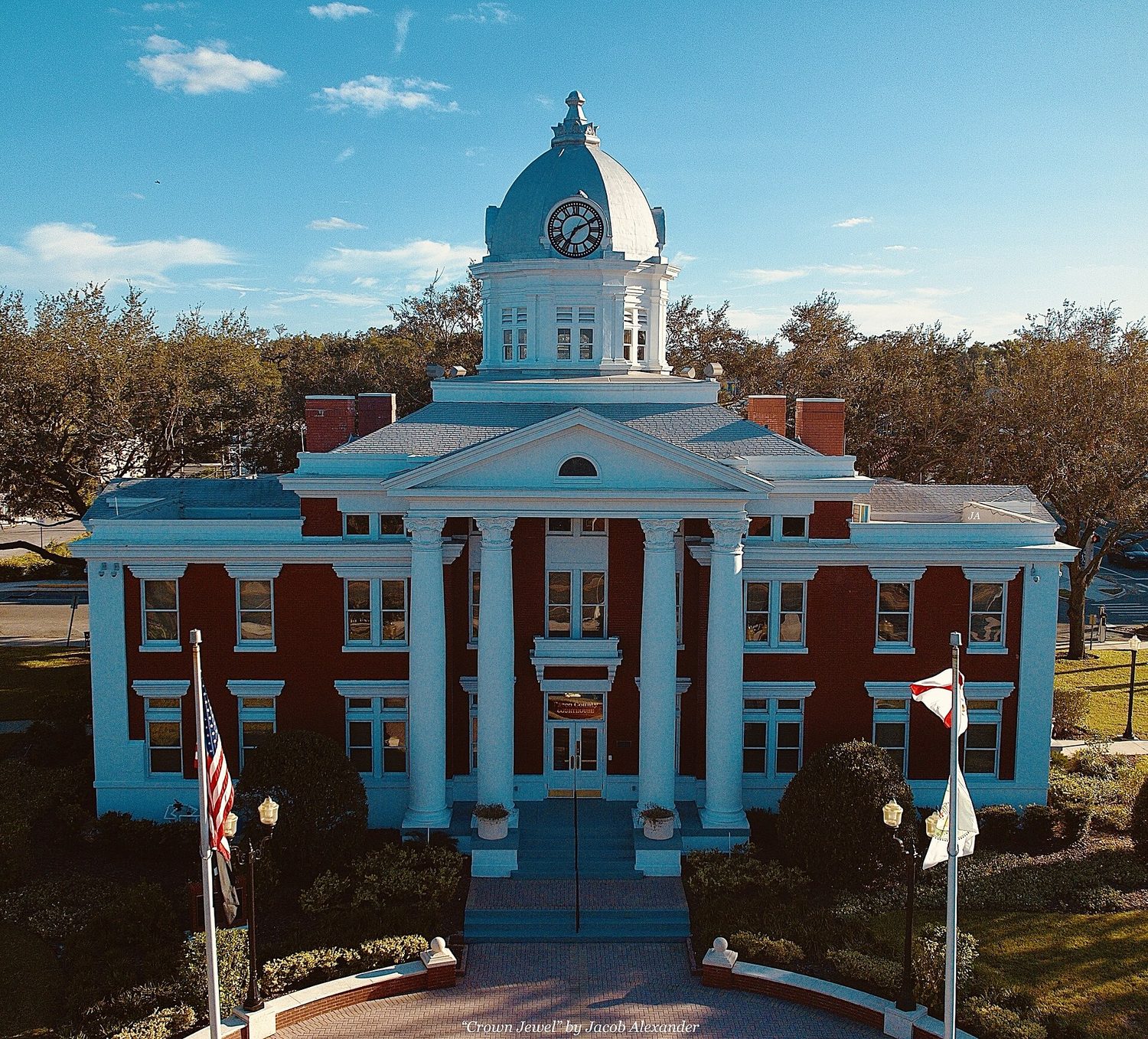
The festival doesn’t happen in a vacuum. Downtown Dade City is organized around the courthouse square, which serves as the civic heart year-round. The square hosts the monthly Dade City Cruise-In, a car show that brings vintage vehicles and spectators to the same streets the Kumquat Festival fills each January.
If you come for the festival, you’re standing on the same ground where the town gathers for cars, holidays, and the everyday rhythm of county-seat life. The square is the anchor, and the festival is its biggest moment.
Pioneer Florida Museum: A Town’s Past in One Campus
A short drive from the square, the Pioneer Florida Museum opened on Labor Day 1975. It’s not a single building but a campus holding a 1913 locomotive, a Methodist church, a pre-Civil War house, an old school, and a train depot. Together, they preserve the agricultural and railroad history that built this part of Pasco County.
The locomotive speaks to the rail lines that shipped citrus and connected Dade City to the rest of Florida. The pre-Civil War house predates the town itself. The depot and school evoke the everyday life of a farming community. It’s a compact, honest look at how the area lived before the festival crowds arrived.
Dade City by the Numbers: Population and Festival Attendance
The census data paints a picture of a small town with modest means and a quiet pace. Dade City’s population is 7,570, with a median age of 42.6 years. The median household income is $63,041, and the unemployment rate sits at 8.6 percent—higher than the state average, a reminder that the local economy isn’t booming.
Housing tells a more nuanced story. There are 3,213 total housing units, of which 464 are vacant. Only 104 units are held for seasonal or recreational use—a fraction of what you’d find in a resort town. The median home value is $211,900, and the median gross rent is $1,002. Just 23.4 percent of residents hold a bachelor’s degree or higher.
These numbers explain the character. Dade City isn’t a wealthy enclave or a retirement colony. It’s a working town with a strong sense of place, where a January festival can draw tens of thousands without changing the fact that most residents aren’t here seasonally. The charm is real, but it’s rooted in permanence, not tourism.
Dade City vs. Nearby Festival Towns
Dade City isn’t the only small Florida town with a signature festival. The comparison shows what’s similar and what’s different.
| Town | Festival | Distance from Dade City |
|---|---|---|
| Dade City | Kumquat Festival | — |
| Clermont | Pig on the Pond | 35 miles |
| Mount Dora | Mount Dora Arts Festival | 50 miles |
| Mount Dora | Mount Dora Craft Fair | 50 miles |
| Altamonte Springs | Red Hot & Boom | 59 miles |
| Sanford | Sanford Porchfest | 70 miles |
| Oviedo | Great Day in the Country | 73 miles |
Mount Dora’s arts and craft events draw a similar crowd of day-trippers, but they sell aesthetics, not agriculture. Clermont’s Pig on the Pond is a food festival with a different protein. Sanford’s Porchfest is about music and neighborhoods. Dade City alone built its identity around a fruit that needs explaining.
That’s the distinction. Other towns celebrate what everyone already knows—art, music, barbecue. Dade City celebrates something most visitors have never tasted. The Kumquat Festival isn’t just a party; it’s an education in a fruit the rest of the country has ignored. And it works because the town believes in it.
Common questions
- What is a kumquat?
- A kumquat is a small citrus fruit you eat whole—skin and all—unlike an orange. It's tart and sweet at once. Most of the country has never tried one, but Dade City grows them in quantity and built its entire festival around the fruit.
- When is the Kumquat Festival?
- The Kumquat Festival is held each January in downtown Dade City, drawing tens of thousands. The star is kumquat pie, a Pasco County speciality, alongside kumquat jelly, butter, and the fresh fruit itself.
- Why is Dade City named Dade City?
- The city is named for US Army Major Francis L. Dade, who was killed in the battle that opened the Second Seminole War. The Hatton post office became the Dade City post office on 18 December 1884, and the town reincorporated as a city on 5 June 1889.
- What is there to see in Dade City besides the festival?
- The Pioneer Florida Museum, opened on Labor Day 1975, holds a 1913 locomotive, a Methodist church, a pre-Civil War house, an old school, and a train depot. The courthouse square is home to the Dade City Cruise-In car show.
- Is Dade City a good place to live?
- With a population of 7,570 and a median age of 42.6, it's a small, settled community. The median home value is $211,900, median gross rent is $1,002, and median household income is $63,041. The unemployment rate is 8.6 percent, and 23.4 percent hold a bachelor's degree or higher.
- What nearby towns have events?
- Clermont (35 miles) has Pig on the Pond; Mount Dora (50 miles) has the Arts Festival and Craft Fair; Altamonte Springs (59 miles) has Red Hot & Boom; Sanford (70 miles) has Porchfest; and Oviedo (73 miles) has Great Day in the Country.
Every business named above is one we hold a listing for, and every date traces to a source on our sources page. We do not describe menus, interiors or service we have not verified. Details change — confirm before you travel.