Guides · Dade City, Florida
Dade City Buildings: History, Courthouse Square & Kumquat Festival
A kumquat is a thumb-sized citrus you eat whole — peel, pith, flesh — and Dade City has built an entire January festival around it. The town named itself for a soldier killed in the Second Seminole War.
Dade City's Name: A Legacy of the Second Seminole War
US Army Major Francis L. Dade died in the battle that opened the Second Seminole War. That war, and the forced removal of Florida's Indigenous people, is the backdrop against which this settlement took shape. The Hatton post office became the Dade City post office on 18 December 1884; the town reincorporated as a city on 5 June 1889 and became the seat of Pasco County when the county was created in 1887. The name is not a booster's flourish — it is a marker of a violent frontier. The town's oldest buildings stand on ground that was, within living memory of the founders, contested territory.
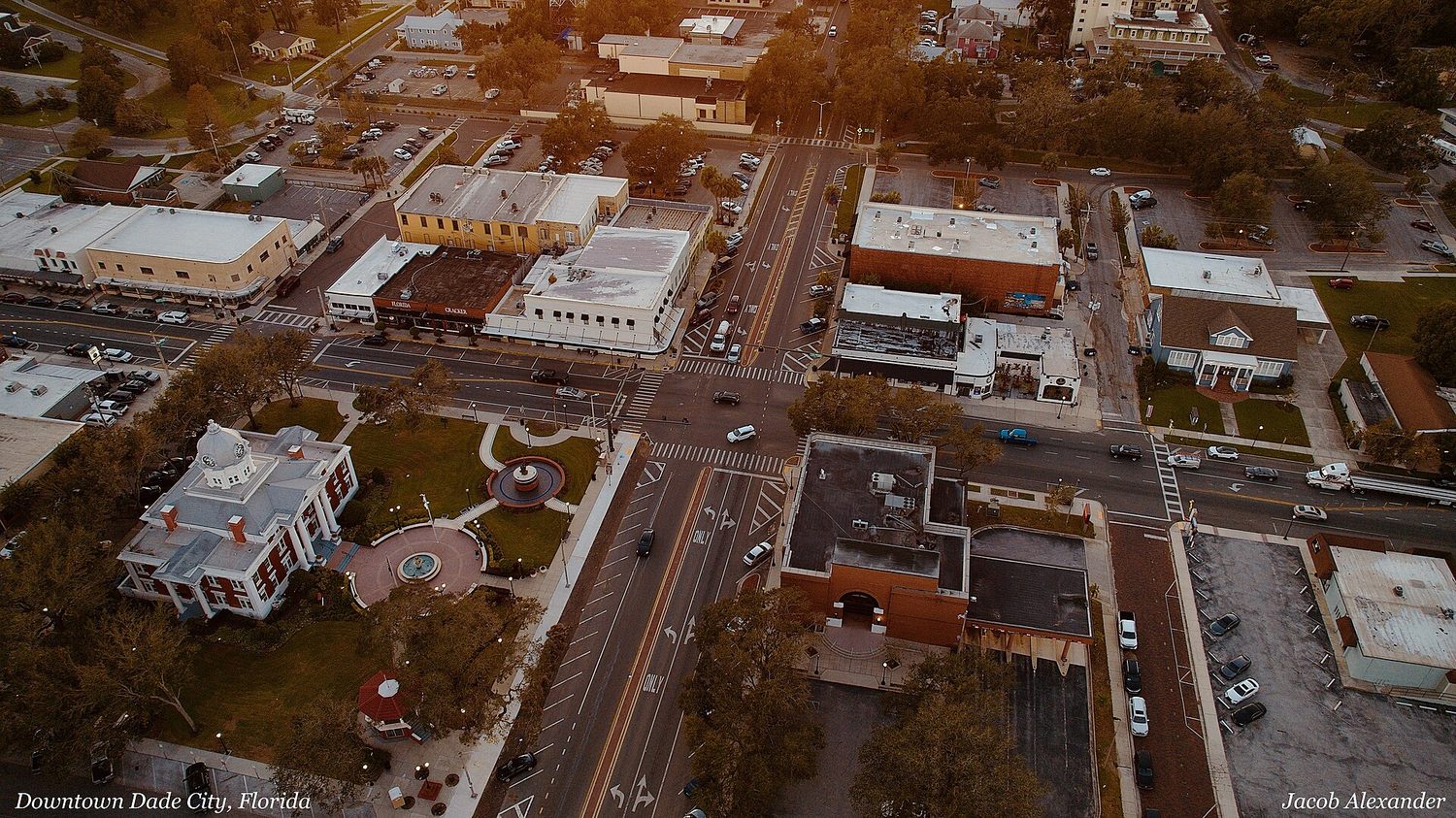
Courthouse Square: The Heart of Dade City's Civic Life
The courthouse square is the civic core, and its layout tells you what this town was built around: county government and public gathering. The square hosts the Dade City Cruise-In car show, which fills the same blocks with chrome and engine noise on regular weekends, and the Kumquat Festival, which packs them with citrus pilgrims each January. The buildings — the courthouse, the storefronts that face it, the shade trees — are arranged to make the space a room, not a thoroughfare. Government at the center, commerce around the edge, the public permanently invited in.
Pioneer Florida Museum: Historic Buildings That Tell the Region's Story
The Pioneer Florida Museum, opened on Labor Day 1975, is a collection of buildings that lets you read the region's layers in a single afternoon. A 1913 locomotive speaks to the railroad's role in moving people and freight. A Methodist church and a pre-Civil War house mark the faith and domestic life of early settlers. An old school and a train depot show how education and transport shaped the community's daily rhythms. These are not artifacts behind glass. They are structures you can walk through, each one a chapter in the story of how a frontier outpost became a county seat.
Kumquat Festival: How an Obscure Fruit Shapes Dade City
The kumquat is the whole point of the town's biggest public event, and the fruit is genuinely obscure — most of the country has never eaten one. It grows here in quantity, and the town built its annual festival around it: a January event in downtown Dade City that draws tens of thousands. The star is kumquat pie, a Pasco County speciality, alongside kumquat jelly, butter, and the fresh fruit itself. This is not a generic street fair. It is a civic identity wrapped around a specific, odd, local crop. The fruit's story is written into the town's identity — a small place that decided its most peculiar product was worth celebrating at scale.
Dade City Demographics: A Snapshot of Residents and Housing
The numbers paint a modest, older, working-town profile. Population is 7,570, median age 42.6 years. Median household income is $63,041, and 23.4 percent of residents hold a bachelor's degree or higher — a sign of a workforce that is not overwhelmingly white-collar. The unemployment rate, 8.6 percent, runs higher than the national average of recent years. Housing is a mix: 3,213 total units, 464 vacant, 104 held for seasonal or recreational use. Median home value is $211,900; median gross rent is $1,002. These figures suggest a town that is not wealthy, not transient, and not booming. The courthouse square's buildings are maintained because they are used, not because they are investment properties.
Dade City vs. Nearby Festivals: A Unique Agricultural Celebration
Nearby towns run festivals too, but theirs lean arts-and-crafts rather than agricultural. Clermont (35 miles) has Pig on the Pond, a barbecue-and-cooking event. Mount Dora (50 miles) runs the Mount Dora Arts Festival and Mount Dora Craft Fair, which are about selling handmade goods. Altamonte Springs (59 miles) hosts Red Hot & Boom, a fireworks show. Sanford (70 miles) has Sanford Porchfest, a music-and-porch tour. Oviedo (73 miles) celebrates Great Day in the Country, a general community fair. Only Dade City's festival is built around a specific crop — and an obscure one at that. That difference is the point: the Kumquat Festival is not a generic good-time event, but a celebration of a fruit that almost nobody outside this region knows how to eat.
| Town (Festival) | Festival Focus | Distance from Dade City |
|---|---|---|
| Dade City (Kumquat Festival) | Citrus fruit, pie, jelly, butter | — |
| Clermont (Pig on the Pond) | Barbecue and cooking | 35 miles |
| Mount Dora (Mount Dora Arts Festival) | Arts and crafts | 50 miles |
| Mount Dora (Mount Dora Craft Fair) | Handmade goods | 50 miles |
| Altamonte Springs (Red Hot & Boom) | Fireworks | 59 miles |
| Sanford (Sanford Porchfest) | Music on porches | 70 miles |
| Oviedo (Great Day in the Country) | Community fair | 73 miles |
Dade City's buildings and its festival are two ways of reading the same story: a town that named itself for a war casualty, grew around a railroad and a courthouse, and now stakes its public identity on a fruit most Americans have never tasted. The architecture tells you how it got here. The kumquat tells you what it chose to become.
Common questions
- What is a kumquat and why does Dade City have a festival for it?
- A kumquat is a small citrus fruit you eat whole, rind and all—sweet skin, tart pulp. It grows in quantity around Dade City, so the town built its annual Kumquat Festival around it each January, drawing tens of thousands for kumquat pie, jelly, and fresh fruit.
- When is the Kumquat Festival held?
- The Kumquat Festival is held each January in downtown Dade City. It's a whole town event featuring kumquat pie, a Pasco County specialty, plus kumquat jelly, butter, and fresh fruit. Tens of thousands attend.
- What can I see at the Pioneer Florida Museum?
- The Pioneer Florida Museum, opened on Labor Day 1975, holds a 1913 locomotive, a Methodist church, a pre-Civil War house, an old school, and a train depot. It's a walk through local history in one spot.
- Is Dade City worth visiting outside the kumquat festival?
- Yes. The courthouse square hosts the Dade City Cruise-In car show, and the Pioneer Florida Museum offers historic buildings and a train. The town itself is small—population 7,570—with a median age of 42.6, giving it a settled, local feel.
- How did Dade City get its name?
- It's named for US Army Major Francis L. Dade, killed in the battle that opened the Second Seminole War. The town's post office changed from Hatton to Dade City on 18 December 1884, and it became the Pasco County seat when the county was created in 1887.
- What are the demographics of Dade City?
- Population is 7,570 with a median age of 42.6. Median household income is $63,041, median home value $211,900, and median gross rent $1,002. About 23.4% of residents hold a bachelor's degree or higher, and the unemployment rate is 8.6%.
Every business named above is one we hold a listing for, and every date traces to a source on our sources page. We do not describe menus, interiors or service we have not verified. Details change — confirm before you travel.