Guides · Dade City, Florida
Dade City Water: Kumquats, Floods & the Aquifer
Dade City is its water. The aquifer that grows its kumquats. The floods that shaped its history. The small-town rituals around the courthouse square.
Why Dade City's History Is Rooted in Water
The origins are a tangle of names and dates hiding a simpler truth: this place is defined by what sits underneath it. The town took its current name on 18 December 1884, when the Hatton post office became the Dade City post office. It reincorporated as a city on 5 June 1889, already the seat of Pasco County, created in 1887. The name honors US Army Major Francis L. Dade, killed in the battle that opened the Second Seminole War—a soldier memorialized in a town he never saw.
The water matters more than the monument. The Floridan Aquifer runs beneath this part of Pasco County, and it is why the town exists where it does. Springs and sinkholes dot the countryside. The shallow, sandy soil over that limestone drains well enough for citrus while holding moisture through dry stretches. The town grew up around that water logic, not a port or a railroad hub. The railroad came later, the courthouse with it. The water was there first.
Why Kumquats Grow So Well in Dade City
A kumquat is a small citrus, about the size of a large olive, with a sweet rind and sour pulp. You eat the whole thing—skin and all. Most people have never seen one. That obscurity is the point. Dade City built a whole festival around it.
Kumquats thrive here because they need exactly what the local water and climate provide: mild winters, warm summers, well-drained soil over a reliable aquifer. They tolerate cold better than most citrus, which matters in a region with occasional frosts. Elsewhere, the fruit is a specialty item at best—too delicate to ship far, too unfamiliar to sell in bulk. In Dade City, it grows in quantity, and the town turned that quirk into an identity.
Kumquat Festival in Dade City: What to Know
The Kumquat Festival happens each January in downtown Dade City, drawing tens of thousands into a town of 7,570. That math alone tells you what the event means locally. The star is kumquat pie, a Pasco County specialty, joined by kumquat jelly, kumquat butter, and the fresh fruit itself. Never tasted one? This is the place to try it—and to discover the peel is the sweet part.
The festival wraps around the courthouse square, filling the streets with vendors, crafts, and the general chaos of a small town hosting a crowd far bigger than its population. It is a one-day event. Plan accordingly.
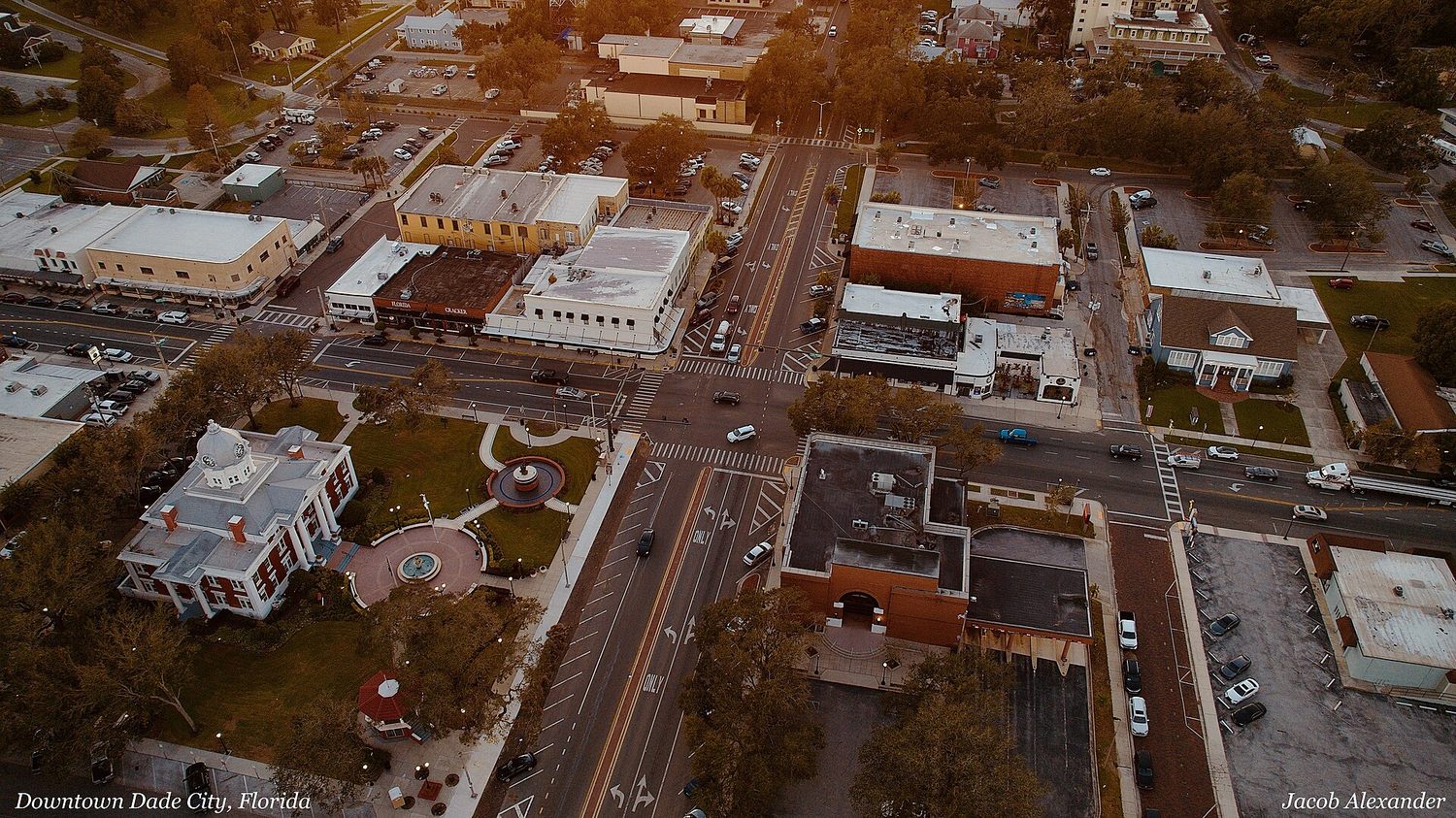
Courthouse Square: Dade City's Gathering Place
The courthouse square is the civic core, hosting the Dade City Cruise-In car show, a regular gathering of vintage cars and curious onlookers under the old trees and by the fountain at the center. The square works because it is a real public space—not a strip mall parking lot, not a pedestrian mall built to imitate one. Benches, grass, and the unforced rhythm of decades of use.
Water shapes the square in ways you might not notice. The fountain is the obvious part. Drainage matters just as much. Florida rain comes down hard, and the square has to shed it quickly or it becomes a pond. The trees that make summer bearable depend on the same aquifer that grows the kumquats. The square is not just a stage for events; it is a small piece of the town’s water system made visible.
Pioneer Florida Museum: See Dade City's Past
The Pioneer Florida Museum opened on Labor Day 1975, holding the kind of collection only a place like this would assemble: a 1913 locomotive, a Methodist church, a pre-Civil War house, an old school, a train depot. The locomotive matters because rail and water were the only ways anything moved through Florida before the highways. The depot, the church, the school—all artifacts of a time when towns were defined by how far you could walk to water or wait for a train.
The museum is not a polished, climate-controlled institution. It is a sprawl of buildings and objects telling the region’s story in the open air, under the same sun and rain that shaped the people who built it. Want to understand how Dade City got here? Start here.
Floods, Droughts, and Dade City's Water Future
Dade City sits in a part of Florida where water is both blessing and threat. Seasonal floods have shaped the town’s history. Aquifer depletion is a live concern across Pasco County as growth pushes north from Tampa. The town’s profile reflects that tension. Median home value is $211,900; median gross rent, $1,002—numbers suggesting a place still affordable compared to the coast. Median household income is $63,041, unemployment sits at 8.6 percent. The median age of 42.6 years hints at a retiring population drawn by pace and price.
The census numbers sketch a town mostly settled and mostly owner-occupied. Of 3,213 housing units, 464 are vacant; only 104 are held for seasonal or recreational use—so this is not a snowbird town like coastal Florida can be. Just 23.4 percent of residents hold a bachelor’s degree or higher, which fits a place built on agriculture, small business, and government work rather than tech or finance.
Dade City is a good place to live if you want small-town Florida without the beach traffic. It is not Sarasota or Naples. It is quieter, cheaper, more grounded in the local soil. The water that grows the kumquats also fills the fountains, floods the streets in heavy rains, and reminds everyone who lives here that they are guests on a very old limestone shelf.
| Stat | Value |
|---|---|
| Population | 7,570 |
| Median age | 42.6 years |
| Median household income | $63,041 |
| Median home value | $211,900 |
| Median gross rent | $1,002 |
| Unemployment rate | 8.6% |
| Bachelor's degree or higher | 23.4% |
| Total housing units | 3,213 |
| Vacant housing units | 464 |
| Seasonal/recreational units | 104 |
Dade City is not a hidden gem. It is a working town with a festival, a courthouse square, and a fruit most of the country has never eaten. Come for the kumquats in January, stay for the museum, and understand that the water underneath it all is the real story.
Common questions
- What is a kumquat and why does Dade City have a festival for it?
- A kumquat is a small, tart citrus fruit eaten whole, rind and all—unlike oranges, you don't peel it. Dade City grows them in quantity, so since the town built its annual festival around the fruit, it's become a local specialty. Most of the country has never tried one.
- When is the Kumquat Festival and what should I eat there?
- The Kumquat Festival is held each January in downtown Dade City, drawing tens of thousands of visitors. The star is kumquat pie, a Pasco County speciality, but you'll also find kumquat jelly, butter, and the fresh fruit itself. Go hungry.
- What is there to see at the Pioneer Florida Museum?
- The Pioneer Florida Museum, opened on Labor Day 1975, holds a 1913 locomotive, a Methodist church, a pre-Civil War house, an old school, and a train depot. It's a walk through the region's history, all in one spot.
- Is Dade City a good place for a car enthusiast to visit?
- Yes. The courthouse square is home to the Dade City Cruise-In car show, a regular gathering that brings classic cars to the heart of town. It's a free, low-key way to see the historic square and chat with locals.
- How big is Dade City and what's the vibe like?
- Dade City has about 7,570 people, with a median age of 42.6. It's a small, older town—only 104 of its 3,213 housing units are seasonal homes, so it's not a tourist trap. Expect a working community, not a resort.
- What's Dade City's history in a nutshell?
- The post office became Dade City on December 18, 1884, and it became the Pasco County seat when the county was created in 1887. The city is named for US Army Major Francis L. Dade, killed in the battle that opened the Second Seminole War.
Every business named above is one we hold a listing for, and every date traces to a source on our sources page. We do not describe menus, interiors or service we have not verified. Details change — confirm before you travel.